
Weighing Railcars in Switching Operations Without Data Silos
Weighing Railcars in Switching Operations Without Data Silos
Weighing railcars is a daily routine process at many loading facilities, industrial sidings, ports and transshipment terminals, as well as classification yards and train assembly facilities — and at the same time, a frequent source of data fragmentation. In practice, rail scales and operational or shipping systems often do not communicate with each other. As a result, data is entered multiple times, weight results are transferred manually, and reports first exist on paper before being re-entered into various downstream systems.
With Waynova’s Rail Yard and Terminal Management, this secondary process becomes a seamless part of switching operations.
The Current Situation: Three Data Breaks per Weighing Process
The Current Situation: Three Data Breaks per Weighing Process
Without integration between the yard system and the rail scale, a typical weighing process often looks like this:
The switching operator walks to the scale terminal located near the rail scale. There, they manually enter the railcar numbers for the cars to be weighed — each car individually, every digit a potential source of error. They then start the weighing process directly at the terminal.
After weighing, the scale prints a paper weight ticket. The operator takes this document — into the control room, the shipping office, or dispatch. This is where the third data break occurs: the weight results are manually entered into Excel spreadsheets, shipping software, or other administrative systems. Some facilities have isolated point-to-point interfaces between individual systems, but rarely a continuous data flow.
The result: high labor effort, delayed data availability, reliance on individuals who know where each number belongs and a structural risk of input errors and incorrect assignments.
Starting Point for Integration
Starting Point for Integration
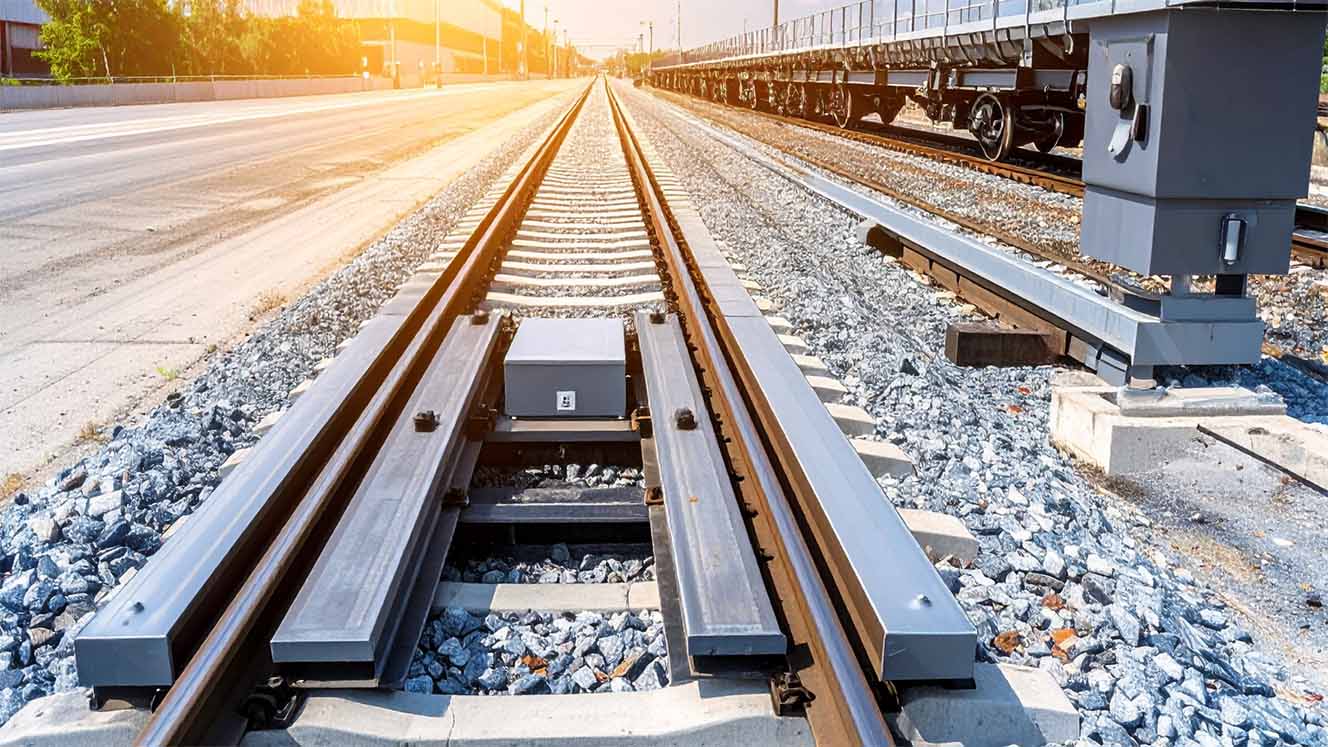
The customer operates one or more rail scales — either static or in-motion scales. The scale is physically installed on a specific track. Every railcar that needs to be weighed must be moved there as part of a switching operation.
How the Integrated Workflow Works
How the Integrated Workflow Works
Our Rail Yard and Terminal Management system is connected to the rail scale software via a standard interface. This enables a seamless process in six steps:
- Order creation: A dispatcher in the control center or alternatively the switching crew via the mobile module — creates a switching order including a weighing request.
- Railcar selection: Within the order (e.g., consisting of 10 railcars), the user selects which cars need to be weighed — either all or specific ones, such as the 2nd, 3rd, 5th, and 7th car. No manual entry of railcar numbers at the scale terminal.
- Data transfer at start: As soon as the locomotive engineer starts the process, the system automatically transmits the required master data of the selected railcars, along with additional information (such as pushing or pulling locomotive), to the rail scale.
- Automatic activation: The rail scale processes the received data and activates itself for the weighing operation.
- Weighing: The locomotive moves the group of railcars over the scale. Only the railcars marked for weighing are measured — without manual intervention.
- Data return and assignment: The weight results, including the digital weight ticket, are sent back to the Rail Yard and Terminal Management system and automatically assigned to the respective railcar and transport order. No paper records, no Excel post-processing.
